II. Form
The boundary that permits contact
Lesson
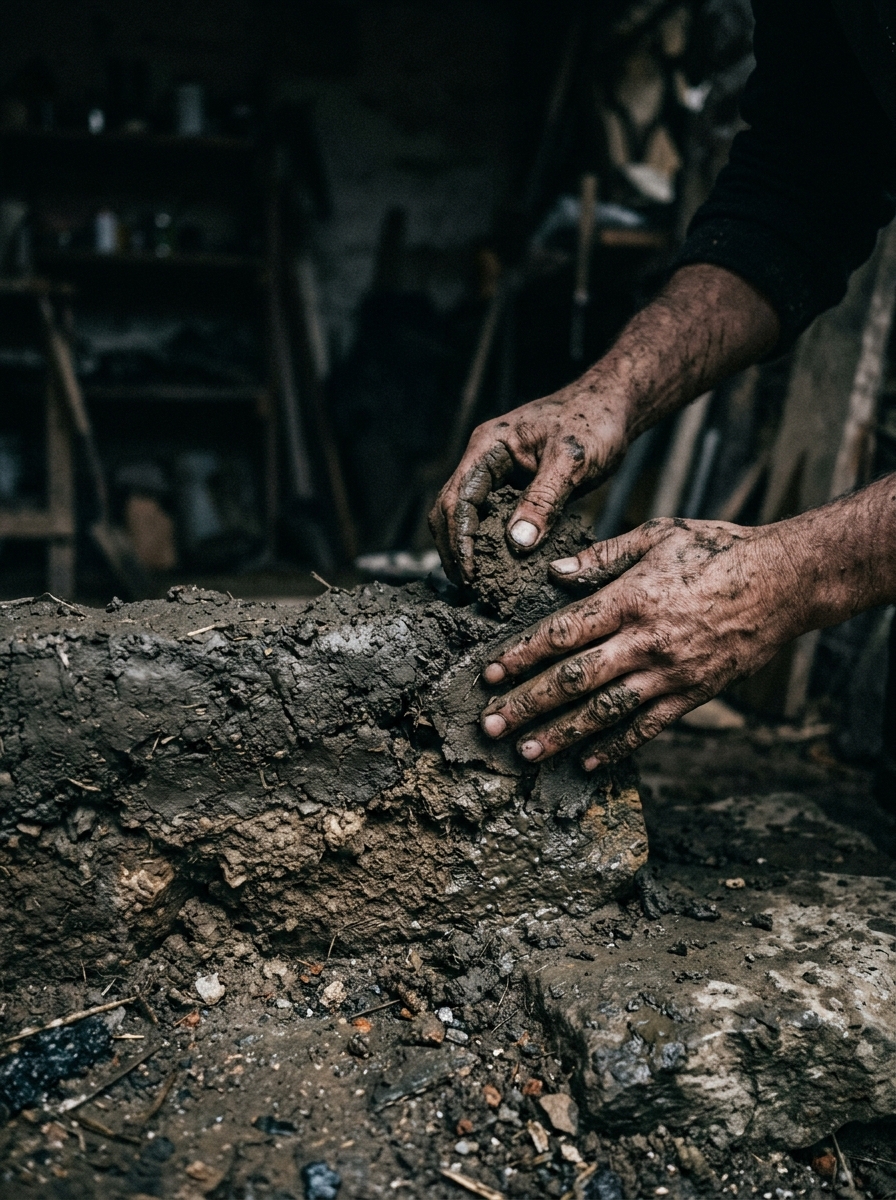
You already know the ache of building what lasts. Every time you stayed at a difficult workbench, held a boundary that cost you easy comfort, or returned to an unglamorous habit when no one was watching, you were standing in Form. The edge does not exist to imprison you; it is the density through which intention stops being a daydream and meets the physical earth. You inhabit Form whenever you accept your own weight, pick up the rough tool in front of you, and let contact carve away what cannot stand.
From the Guide
What was received in stillness must now be tended. The first light does not sustain itself. It requires return — the quiet, unglamorous coming back, again and again, to what is true. Form is not imposed in this Realm. It is revealed by contact. The Traveler who enters here discovers that the shape is not the constraint. It is the condition through which intention becomes real. Stone does not hurry. It simply holds its shape until the thing inside it is ready to be seen.
— A Wanderer’s Guide to the Gates
From the History
The weight comes before the understanding. That is the nature of the Gate of Weight. It does not explain itself. It does not offer reasons or prepare the ground. It simply descends — a density in the air, a slowness in the limbs, a gravity that is not the gravity of the body but of everything the self has ever agreed to carry. Some resist. They brace. The ones who pass through are not the ones who are strongest. They are the ones who learn, in the pressing, that the weight is not the enemy. That what compresses is also what clarifies.
— A History of the Great Wheel and the Ten Gates