VI. Compassion
The opened seat without defense
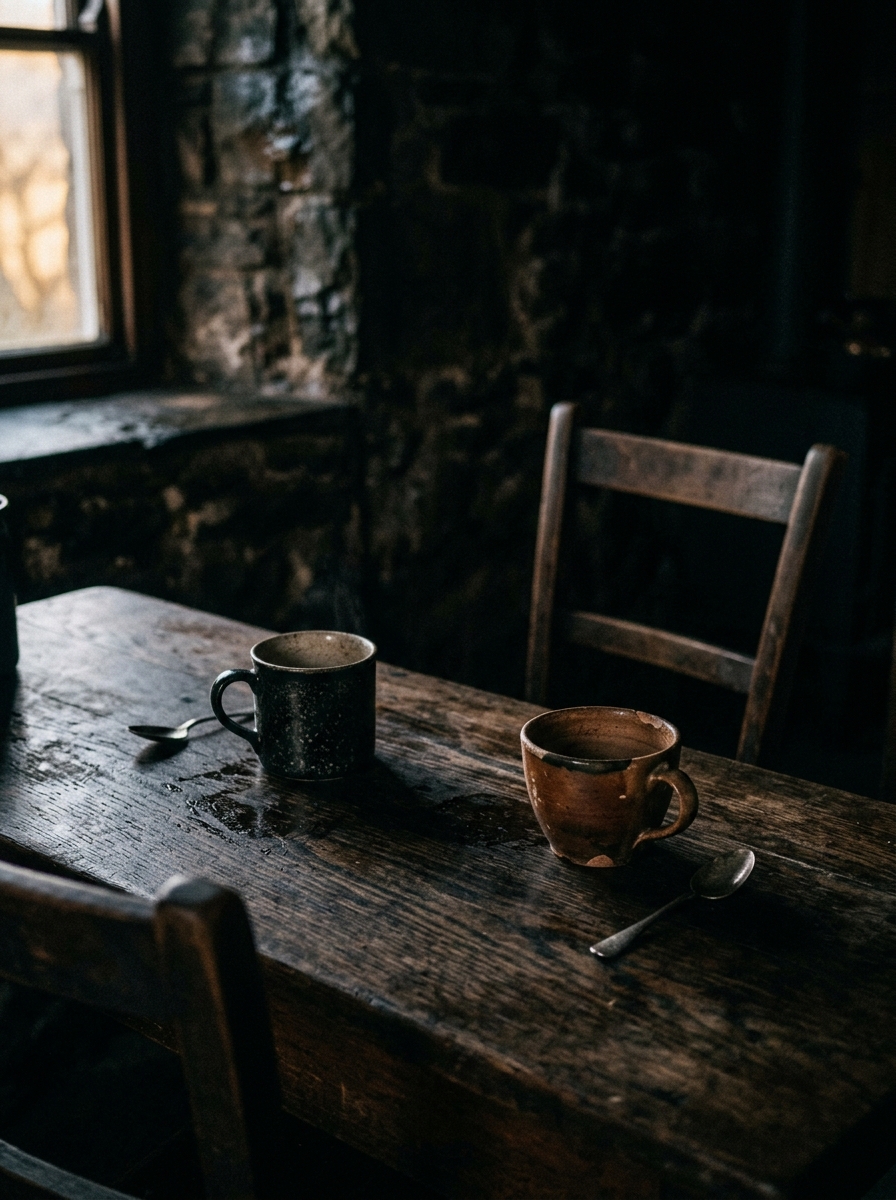
Lesson
You know the moment in a kitchen late at night when the argument dies down and neither person reaches to win. Compassion is not soft sentimentality, pity, or collapsing yourself to keep someone else placated; it is the courage to remain whole while pulling out a chair for another truth. You inhabit Compassion whenever you sit across from a human being without armor and without manipulation, allowing two lives to occupy the same quiet air without demanding that either one diminish.
From the Guide
Everything that came before this was interior work. The self found, tended, clarified, directed, seen clearly. Now that self — carrying everything it has gathered — steps into the presence of another self. Equally real. Equally whole. Equally true. The Realm does not ask the Traveler to dissolve. It does not ask them to dominate. It asks something harder and rarer: to remain fully themselves while making genuine room for someone else to do the same. This is the Realm of Compassion. The Gate here forms in the space between — in the quiet that two people create when neither is performing and neither has disappeared.
— A Wanderer’s Guide to the Gates
From the History
What came before was interior work. The self found, shaped, sharpened, seen clearly. Now that self steps into the presence of another. Equally real. Equally whole. And something that was never asked before is asked here: can a person remain fully themselves while making genuine room for someone else to do the same? The Gate of Reflection does not ask for dissolution. It does not ask for dominance. It asks something harder and rarer than either — the Gate forms in the space between, in the quiet that two people create when neither is performing and neither has disappeared.
— A History of the Great Wheel and the Ten Gates